

Common running injuries on the Northern Beaches: what's actually causing them
Movement Health & Wellness, Cromer — AHPRA-registered chiropractic care — last updated September 2026The Northern Beaches has no shortage of places to run — the coastal path from Manly to Dee Why and on to Collaroy, the trails around Narrabeen Lagoon, North Narrabeen parkrun on a Saturday morning. It also has no shortage of runners turning up with the same handful of injuries after a few months of building volume.
Shin splints, iliotibial band (ITB) syndrome, runner's knee and plantar fasciitis account for most of what we see. They're different injuries in different parts of the leg, but they usually share the same underlying driver: load applied faster than the tissue could adapt to it.
Why this keeps happening
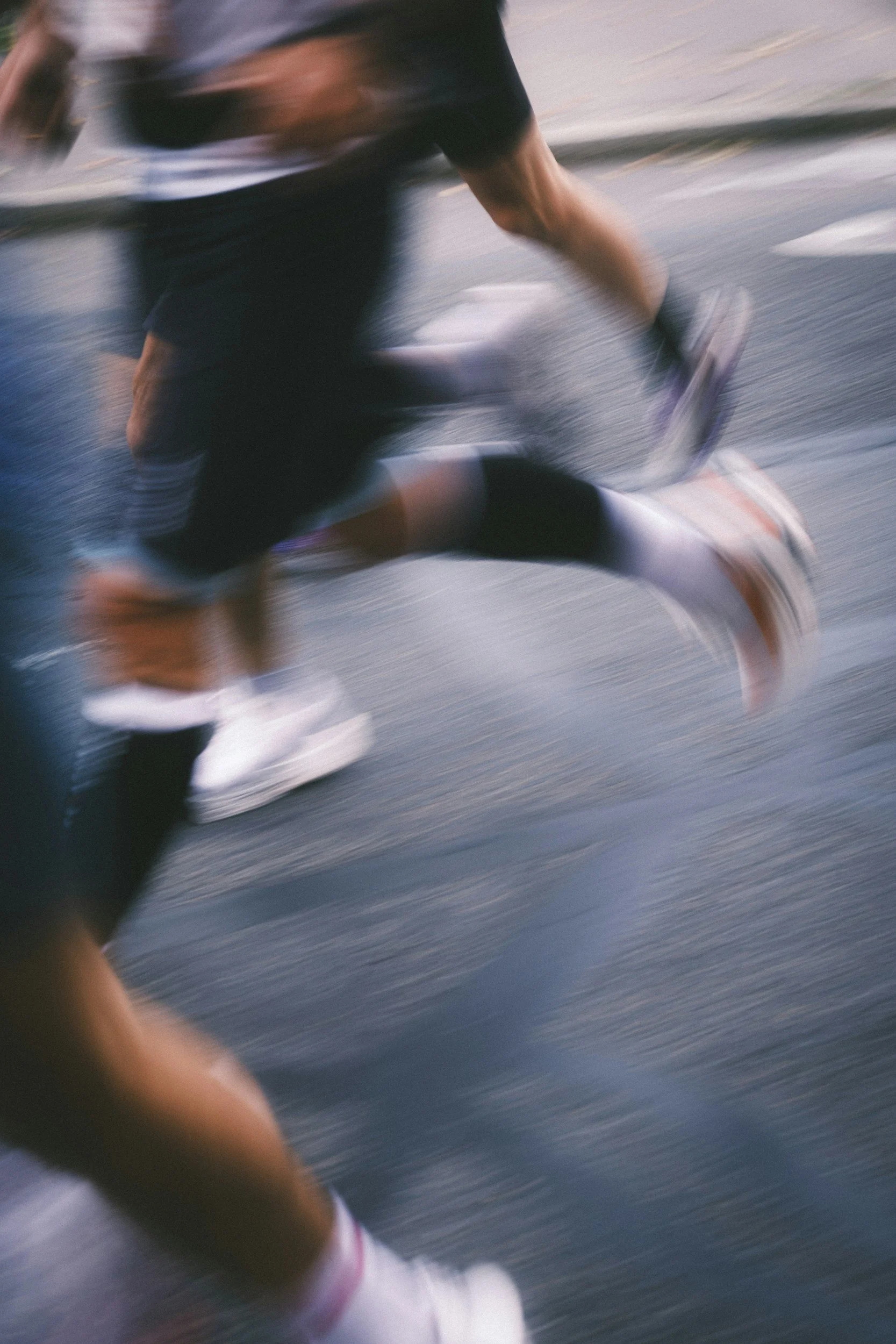
Running is a repetitive, high-load activity — each foot strike puts several times your bodyweight through the leg, thousands of times per run. The body adapts to that well, but only at a rate roughly matched to how gradually the load increases. Most running injuries trace back to some version of the same pattern: volume, intensity or frequency going up faster than tissue capacity can keep pace, often alongside a change — new shoes, a hillier route, more beach running, or picking training back up after time off.
That's the frame worth having before looking at any one injury individually, because the fix is rarely just "stretch this" or "strengthen that." It's usually the load pattern that needs addressing first.
Shin splints (medial tibial stress syndrome)
A dull, aching pain along the inner edge of the shin, usually worse at the start of a run and easing once warmed up — though in more established cases it can persist throughout and afterwards.
What's usually driving it: a jump in training load (distance, frequency, or hard surfaces like footpaths and roads) faster than the shin bone and surrounding muscles have adapted to. Calf tightness and reduced ankle mobility often play a role too.
Worth knowing: shin splints and a stress fracture aren't the same thing, but one can progress toward the other if load isn't managed. A pain that becomes sharp and localised to one specific spot on the bone, or that's present at rest and at night, is worth getting checked rather than pushed through.
What helps: reducing training load for a period rather than stopping altogether, calf and ankle strength and mobility work, and a gradual, structured return — this is the injury where "how you build back up" matters as much as the initial rest.
Iliotibial band (ITB) syndrome
A sharp or aching pain on the outside of the knee, typically appearing at a fairly consistent point in a run and easing with rest.
What's usually driving it: ITB syndrome is less about the band itself being "tight" and more about hip control. Weakness in the glutes (particularly the muscles that stop the hip dropping and rotating inward with each step) tends to increase friction and compression at the outside of the knee as fatigue sets in.
What helps: hip and glute strengthening is the best-supported piece of the puzzle here, and tends to work better combined with manual therapy and a sensible reduction in training load than on its own. Improvement is realistic over several weeks with a structured program — it's rarely an overnight fix, but it responds well to the right one.

Runner's knee (patellofemoral pain)
An ache around or behind the kneecap, often worse going downhill, downstairs, or after sitting for a while with the knee bent.
What's usually driving it: how the kneecap tracks through its groove as the knee bends and straightens, influenced by quad and hip strength, training load, and sometimes running form. It's rarely about one single cause, which is part of why generic advice ("just strengthen your quads") doesn't always fix it.
What helps: targeted strength work — quads and hips both — paired with load management. Assessment matters more here than with most running injuries, because what's driving one person's kneecap pain can be quite different to another's.
Plantar fasciitis
Pain under the heel or arch, classically worst with the first few steps in the morning or after sitting, that eases somewhat with movement then can build again through the day.
What's usually driving it: repetitive load through the plantar fascia outpacing its capacity to adapt, often alongside calf tightness, a sudden increase in running volume, or a change in footwear or surface.
What helps: calf and foot strengthening (particularly loaded, progressive exercises) has reasonable evidence behind it, alongside load management. Footwear changes can help some people, but they're not a fix on their own, and expensive orthotics aren't necessary for everyone — assessment is more useful than guessing.
Red flags worth knowing
Most running injuries are mechanical, load-related and manageable without imaging. A few things are worth getting checked properly rather than working around:
pain that's sharp, focal to one small spot on a bone, and doesn't ease with rest
pain present at night or unrelated to activity
swelling, redness or warmth out of proportion to the injury
numbness, tingling, or pain that radiates rather than staying local
a sudden, significant increase in pain rather than a gradual one
None of this is a diagnosis — it's a guide for when to get assessed sooner rather than waiting it out.
Chiro or physio for a running injury?
Neither profession has an inherent edge here. Outcomes for common overuse running injuries are broadly comparable across sports chiropractic and physiotherapy — what actually matters is whether the practitioner assesses your training load, strength and movement properly and builds a specific plan around it, rather than treating the sore spot in isolation each visit.
How we approach it at Movement Health & Wellness
Assessment looks at the injury itself, but also training load, strength through the hip and ankle, and running mechanics where relevant, because the painful spot is usually where the load is showing up, not necessarily where the problem started. From there it's a mix of hands-on care where it's useful and an exercise-led rehab plan built around your actual training goals — whether that's getting back to parkrun, a half marathon block, or just running without wincing on the stairs afterwards.
A few things to try now
Not a replacement for assessment if pain has been building over weeks, but reasonable starting points:
pull training volume back for a week or two rather than stopping completely — total rest often just delays the same problem
change one thing at a time (surface, shoes, hills) rather than several at once, so you can tell what's actually helping
note whether pain is worse at the start of a run and eases, or builds through it — that pattern is a useful clue for what's going on
get assessed sooner rather than later if pain is affecting how you run, not just how you feel afterwards
Frequently asked questions
What's the difference between shin splints and a stress fracture? Shin splints cause a duller, more diffuse ache along the shin that's often worse early in a run and eases with warming up. A stress fracture tends to be more focal — pain at one specific spot on the bone — and doesn't ease with activity, often persisting at rest or at night. If pain fits that second pattern, it's worth getting checked rather than continuing to train through it.
How do I know if it's runner's knee or something else? Runner's knee (patellofemoral pain) typically sits around or behind the kneecap and is worse with downhill running, stairs, or prolonged sitting. Pain on the outside of the knee is more often ITB syndrome. Because several different structures can cause knee pain in runners, a proper assessment is the most reliable way to know which one you're dealing with.
Do I need orthotics for plantar fasciitis? Not necessarily. Footwear and orthotics can help some people, but calf and foot strengthening combined with sensible load management tends to matter more, and orthotics aren't a fix on their own. Whether they're worth it depends on individual assessment rather than a blanket rule.
Should I stop running if I have ITB pain? Not always — reducing volume rather than stopping altogether, alongside hip and glute strengthening, is usually more effective than complete rest. If pain is severe or changes how you run, get it assessed first.
How long do running injuries take to heal? It depends on how long the injury has been building and what's driving it. Recent, mild issues can settle in a few weeks with load management and the right exercises. Longer-standing injuries usually take longer and respond better to a structured plan than to rest alone.
Chiro or physio for a running injury? Neither profession is inherently better for common overuse running injuries — outcomes are broadly comparable across sports chiropractic and physiotherapy. What matters more is finding a practitioner who assesses training load, strength and mechanics properly and builds a specific plan.
This article is general information and isn't a substitute for individual assessment. If a running injury isn't settling, book an assessment so we can look at what's actually driving it for you.
