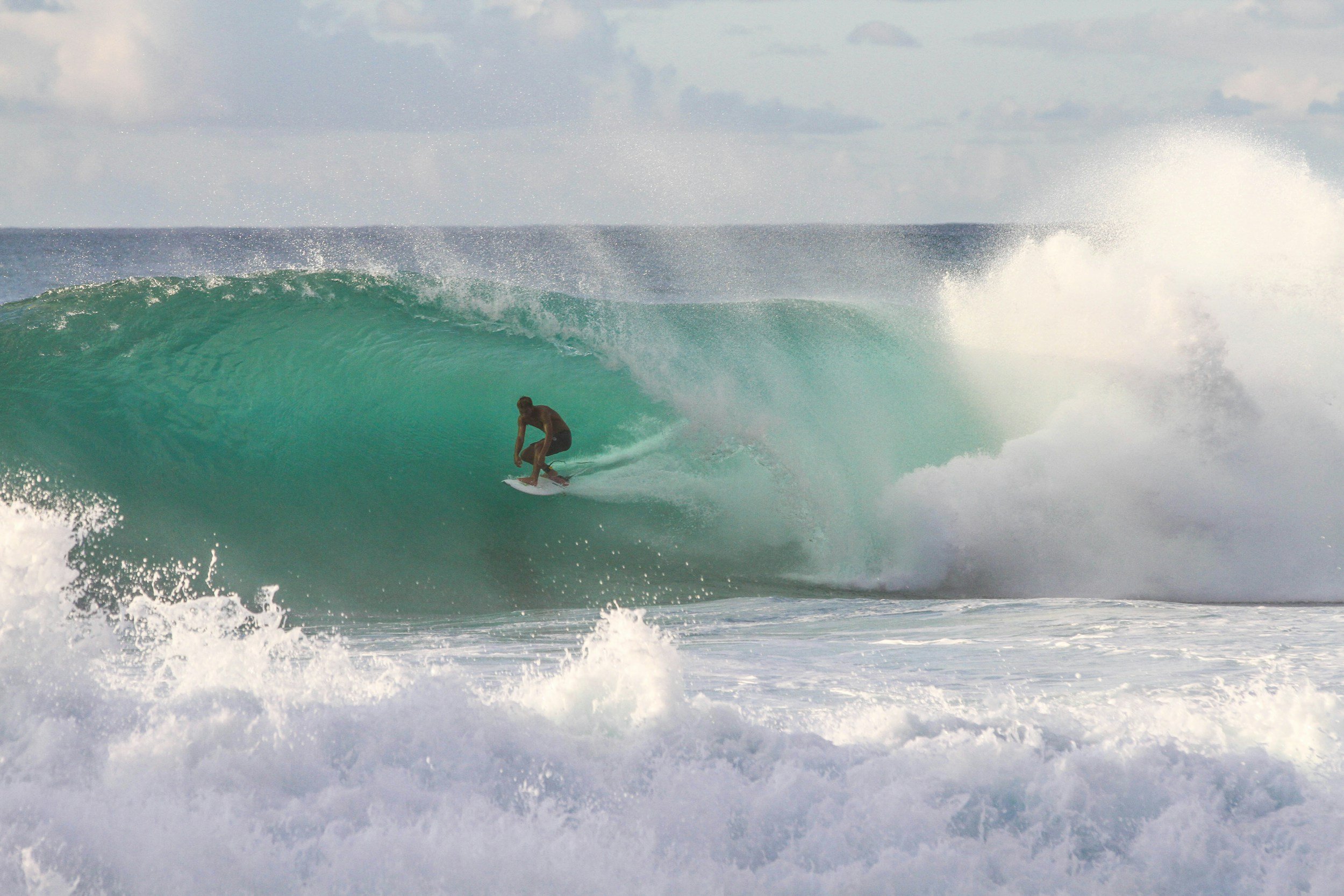
Why Does My Back Hurt When I Surf?
If your lower back is stiff, achey, or downright sore after a session, you're in good company. Back pain is one of the most common complaints we see from surfers across the Northern Beaches — and the good news is it's usually very manageable once you understand what's driving it.
Let's break down why it happens, what it does (and doesn't) mean, and what actually helps.

It usually comes down to two things
Paddling. You spend most of a session lying prone with your chest lifted and your lower back in sustained extension. Hold that position for a couple of hours, a few times a week, and the muscles and joints around your lower back get loaded in a way they're not used to. It's not that the position is "bad" — it's that it's repetitive and sustained, usually without much to balance it out.
The take-off. This is a fast, loaded movement that asks your spine to extend and rotate at the same time — often when you're already fatigued and your technique's starting to slip. Add cold muscles, a big session, or a long paddle out, and the lower back tends to cop the load that tired hips and a stiff mid-back aren't sharing.
Most surf-related back pain is some combination of these two: a lot of load, in similar positions, without quite enough strength or mobility elsewhere to spread it around.
Hurting doesn't mean you're damaged
This part matters, so we'll say it plainly: pain does not automatically mean damage.
It's easy to assume something's "out" or that your spine is fragile — that's the old story a lot of us grew up with. But modern pain science tells us something more useful. Pain is influenced by load, sleep, stress, fatigue and how sensitised your nervous system is on the day — not just the state of your tissues. Two surfers with identical scans can have completely different levels of pain.
What that means for you: being sore after a big session doesn't mean you've done yourself an injury, and it very rarely means you need to stop surfing. It means your body is asking for a bit more capacity than it currently has — and capacity is something we can build.
What actually helps
Not "rest it and hope." The things that genuinely move the needle:
Manage the load. You don't have to stop surfing — but stacking a huge session onto a tired back with no recovery is where niggles turn into problems. Spread it out.
Free up your mid-back and hips. When your thoracic spine and hips move well, your lower back doesn't have to do their job. Most surfers we see are stiff in exactly the spots they need to be mobile.
Get strong where it counts. Glute, hip and trunk strength are what let your lower back share the load instead of absorbing all of it. This is the piece most surfers skip — and the one that keeps you in the water long-term.
Address it early. A niggle you sort out in a week is a much easier conversation than one you've surfed through for three months.
When to get it looked at
If your back pain keeps coming back, isn't settling, or is starting to change how you surf, it's worth getting a proper assessment — ideally from someone who actually understands the demands of the sport.
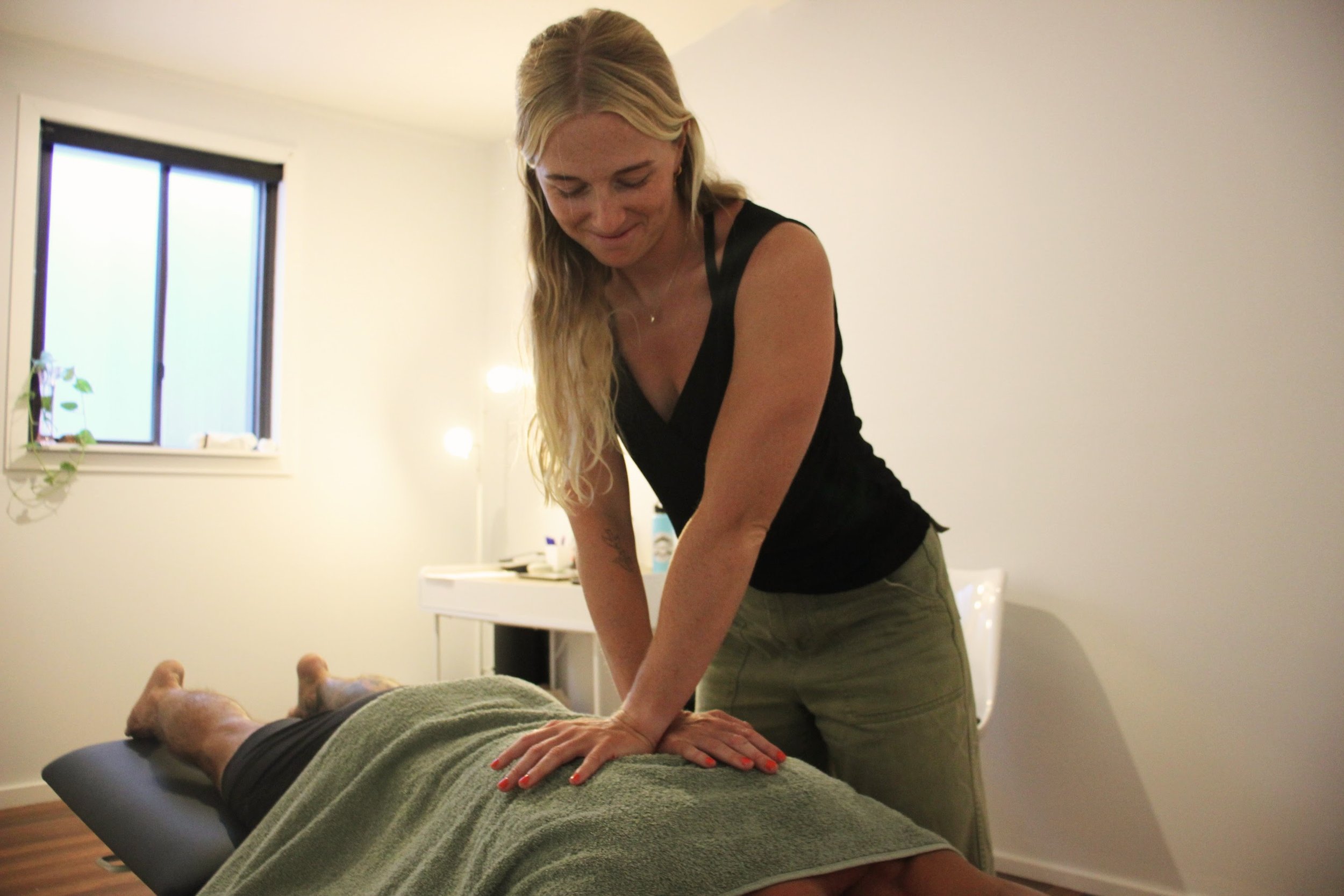
At Movement Health & Wellness in Cromer, we work with surfers across Dee Why, Narrabeen, Collaroy and the wider Northern Beaches. We combine hands-on chiropractic care with surf-specific strength and rehab, so you're not just out of pain — you're built to stay in the water. Same-day appointments are available.
get in touch at hello@movement-wellness.com or book an assessment today.