

You've had a scan, it shows a rotator cuff tear, and now you're wondering if you need surgery. It's one of the most common shoulder questions we get at our Cromer clinic, from surfers who've been paddling through pain to gym-goers who can't press overhead any more.
The honest answer: it depends on what kind of tear it is, how it happened, your age and what you need your shoulder to do. For most degenerative tears, a proper rehab program comes first. For some tears, getting a surgeon's opinion early matters. Here's how to tell the difference.
What is a rotator cuff tear?
The rotator cuff is a group of four muscles and their tendons that wrap around the shoulder joint and help control it. A tear is damage to one or more of those tendons. Most tears involve the supraspinatus, which sits across the top of the shoulder.
Tears come in two broad types:
Degenerative tears develop gradually with age and load. They're the most common kind.
Traumatic tears happen with a specific injury: a fall onto an outstretched arm, a dislocation, or a heavy lift that goes wrong.
They can also be partial-thickness (the tendon is frayed but not torn through) or full-thickness (there's a hole right through it).
Symptoms can include pain (often worse at night or lying on that side), weakness lifting the arm, and reduced range of movement. But plenty of people with a tear have no symptoms at all.
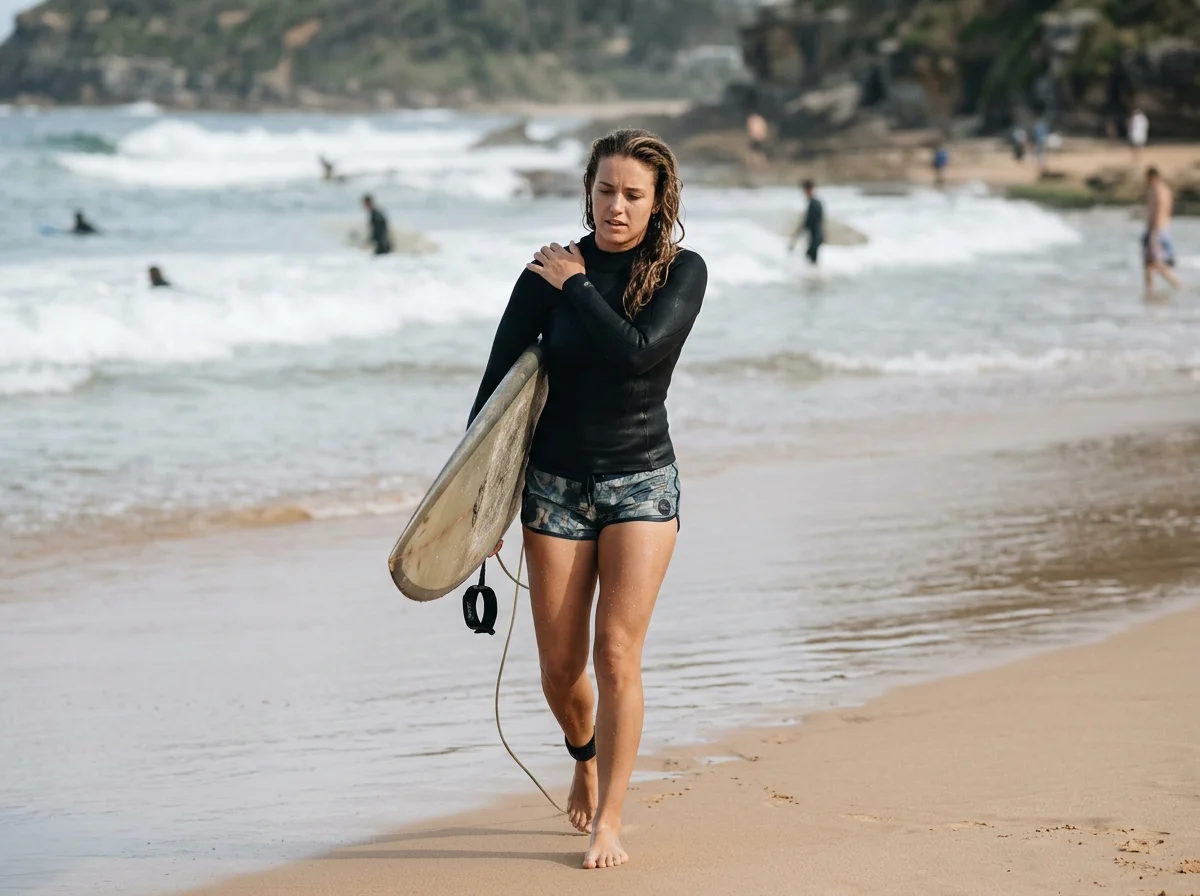
A tear on a scan isn't always the cause of your pain
Rotator cuff tears are extremely common as we age. In one Japanese study that scanned the shoulders of an entire village, full-thickness tears showed up in about 11% of people in their 50s, rising to about 37% of people in their 80s. Around two-thirds of those tears caused no symptoms.
For many people, a degenerative tear is closer to grey hair than to an injury. It's a normal age-related change that may or may not be the source of the pain. That's why the scan is only part of the picture. What you can and can't do, how it started, and how your shoulder responds to loading matter just as much.
The "hole in a blanket"
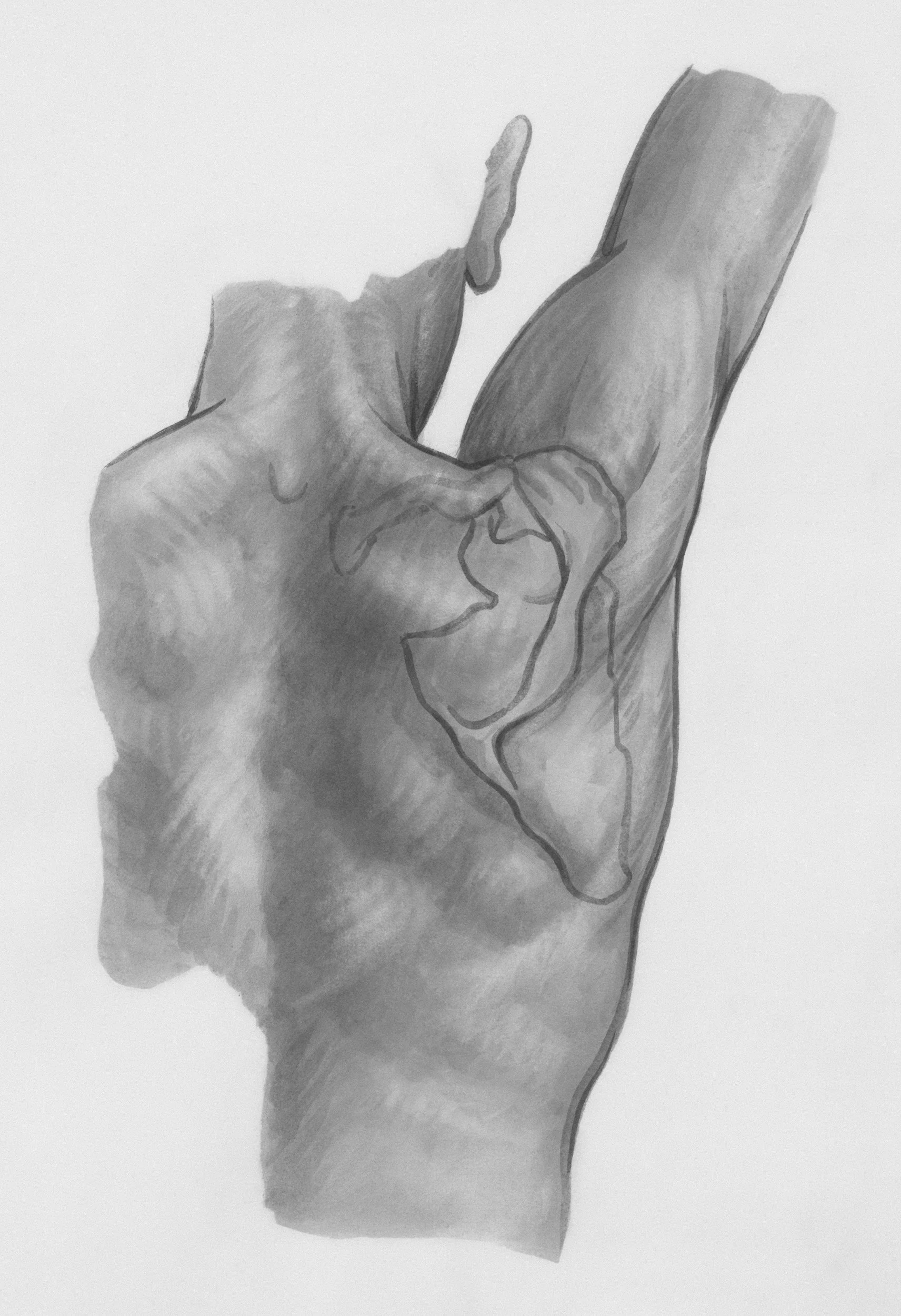
Most people picture tendons as thick ropes. Some are. The rotator cuff isn't. Its tendons blend into a broad, flat sheet that wraps around the top of the shoulder.
So a tear is less like a snapped rope and more like a hole in a blanket. The blanket still works. The rest of the tendon can still carry load, and it can be strengthened. That's a big part of why many people with tears regain good, pain-free function without surgery.
Do rotator cuff tears get worse?
Some do. Full-thickness tears are more likely to get bigger over time than partial tears, and many small tears stay fairly stable for years. Size doesn't map neatly onto pain either: a tear can grow without symptoms getting worse, and vice versa.
Factors linked to tears developing or progressing include:
smoking
diabetes
carrying extra weight
heavy or repetitive overhead work
age, and the general health of the tendon
The first four are things you can do something about.
Rehab or surgery: what the evidence says
For degenerative tears, rehab first. A 2019 Cochrane review found that, for mostly small degenerative tears in older adults, surgery gave little or no meaningful benefit over exercise-based care at one year. In a large US study of people with non-traumatic full-thickness tears, about three-quarters who did a structured physio program hadn't needed surgery two years later.
But surgery isn't pointless. A Norwegian trial followed people with small-to-medium full-thickness tears for 15 years. Both groups improved early on. Over the long term, the group who had surgery first did better on pain and function, and tears left unrepaired roughly doubled in size. This mostly matters for younger, active people with a full-thickness tear who need their shoulder for decades of surfing, lifting or work.
Traumatic tears are a separate conversation. For small acute traumatic tears, a Swedish trial found rehab and surgery both worked well. Larger tears after an injury, especially with sudden weakness, are generally better repaired sooner rather than later, because tendons can retract and the muscle can deteriorate if left too long.
When to get a surgical opinion early
See your GP or a shoulder surgeon promptly if:
you suddenly can't lift your arm after a fall, dislocation or heavy lift
you've dislocated your shoulder and you're over 40 (cuff tears are common with dislocations in this age group)
you're younger and active, and a scan shows a full-thickness tear
your shoulder isn't improving after a genuine three-month trial of rehab
Seeing a surgeon doesn't mean you'll end up having surgery. It means you get the decision made with the full picture.
What rehab involves
Good conservative care for a rotator cuff tear is built around exercise. That usually means:
Progressive strengthening of the rotator cuff and the muscles around the shoulder blade, building load over weeks
Temporary changes to training, surfing or work to calm things down without stopping completely
Hands-on care where it helps, such as soft tissue work, joint mobilisation or dry needling, mostly for short-term pain relief while the exercise does the heavy lifting
A plan back to what you love, whether that's paddling, pressing or playing with the kids
For some people, a corticosteroid injection, discussed with your GP, can settle pain enough to get the rehab going.

Rotator cuff rehab at our Cromer clinic
At Movement Health & Wellness, upstairs at Surfers Gym in Cromer, we see a lot of shoulders: surfers, lifters, swimmers and people who just want to sleep through the night. Both chiropractic and physiotherapy are available.
We'll start with a thorough assessment, look at any scans you've had, and explain what we think is going on. If rehab is the right first step, we'll build a strengthening program around your sport and goals, and we can run it in the gym downstairs. If your shoulder needs a surgeon's opinion, we'll tell you, and help coordinate a referral through your GP.
If shoulder pain is getting in the way of surfing, training or sleep, [book an assessment].
-
No. Many degenerative tears are managed well with exercise-based rehab, and some cause no symptoms at all. Surgery is more often considered for large or acute traumatic tears, younger active people with full-thickness tears, or when a proper trial of rehab hasn't helped.
-
A full-thickness tear rarely closes on its own, but that doesn't mean the shoulder can't recover. Many people regain good strength and pain-free function with rehab, because the rest of the tendon and the surrounding muscles can be strengthened.
-
For a degenerative tear, a genuine trial of progressive exercise-based rehab is usually around three months. If you're not improving by then, it's reasonable to get a surgical opinion.
-
Often, yes, with some changes while symptoms settle. Paddling volume is usually the thing to adjust first. A practitioner can help you work out how much is too much and build back up.
References
Bedi A, Bishop J, Keener J, et al. Rotator cuff tears. Nat Rev Dis Primers. 2024;10(1):8.
Minagawa H, Yamamoto N, Abe H, et al. Prevalence of symptomatic and asymptomatic rotator cuff tears in the general population: from mass-screening in one village. J Orthop. 2013;10(1):8–12.
Teunis T, Lubberts B, Reilly BT, Ring D. A systematic review and pooled analysis of the prevalence of rotator cuff disease with increasing age. J Shoulder Elbow Surg. 2014;23(12):1913–1921.
Fucentese SF, von Roll AL, Pfirrmann CW, et al. Evolution of nonoperatively treated symptomatic isolated full-thickness supraspinatus tears. J Bone Joint Surg Am. 2012;94(9):801–808.
Kong BY, Cho M, Lee HR, et al. Structural evolution of nonoperatively treated high-grade partial-thickness tears of the supraspinatus tendon. Am J Sports Med. 2018;46(1):79–86.
Karjalainen TV, Jain NB, Heikkinen J, et al. Surgery for rotator cuff tears. Cochrane Database Syst Rev. 2019;12:CD013502.
Kuhn JE, Dunn WR, Sanders R, et al. Effectiveness of physical therapy in treating atraumatic full-thickness rotator cuff tears: a multicenter prospective cohort study. J Shoulder Elbow Surg. 2013;22(10):1371–1379.
Moosmayer S, Lund G, Seljom US, et al. At a 10-year follow-up, tendon repair is superior to physiotherapy in the treatment of small and medium-sized rotator cuff tears. J Bone Joint Surg Am. 2019;101(12):1050–1060.
Moosmayer S, Lund G, Seljom US, et al. Fifteen-year results of a comparative analysis of tendon repair versus physiotherapy for small-to-medium-sized rotator cuff tears. J Bone Joint Surg Am. 2024;106(19):1785–1796.
Ranebo MC, Björnsson Hallgren HC, Holmgren T, Adolfsson LE. Surgery and physiotherapy were both successful in the treatment of small, acute, traumatic rotator cuff tears: a prospective randomized trial. J Shoulder Elbow Surg. 2020;29(3):459–470.
Chalmers PN, Ross H, Granger E, et al. The effect of rotator cuff repair on natural history: a systematic review of intermediate to long-term outcomes. JB JS Open Access. 2018;3(1):e0043.
Ryösä A, Laimi K, Äärimaa V, et al. Surgery or conservative treatment for rotator cuff tear: a meta-analysis. Disabil Rehabil. 2017;39(14):1357–1363.
Page MJ, Green S, McBain B, et al. Manual therapy and exercise for rotator cuff disease. Cochrane Database Syst Rev. 2016;(6):CD012224.
